Alberto, thank you so much for joining me on my blog to talk about your work and love of composing. What do you love about your life right now?
Thank you for having me! Right now I’m in the middle of planning my wedding, trying to stay social, keep healthy, and make the most of my free time — even if there isn’t much of it. I don’t think I’ve ever had such a healthy balance. And I don’t mean that I have loads of free time, but rather that I’m truly enjoying it and switching headspaces efficiently when I do.
Congrats on your engagement! From what I know about film composers, your storytelling is through your music. When did your journey of composing music begin? Also, was this your dream as a child to be a film composer?
My journey with composition started in my early teens. I was a classical guitar player — taught at school, never through a conservatoire — but I had a really good guitar teacher who pushed me and helped me discover what music could become for me. My parents gifted me an electric guitar and a loop pedal, and I started drafting ideas with those. Then, for a school project when I was 15, I composed my first proper song — a fully realised idea — using just the guitar and the loop pedal. I called it Northern Lights. That same teacher later introduced me to the world of music production and the possibilities of making a living from it, and I decided to give it a go.
As for your second question, I think I always had a thing for film music, but I never really considered it a viable career path. It wasn’t until I started composing my first pieces that I began researching the field, and I discovered that so many of my most treasured musical memories had been written by the same three or four names. That’s when I fell down the rabbit hole of film music and started fantasising about the possibility of becoming a composer myself.
That fantasy began to become reality at university, where I began entering film-scoring competitions organised by some of the world-leading audio software and plugin companies. I was lucky enough to place third in my very first competition, winning a suite of plugins and virtual instruments — my first-ever sample libraries. Around the same time, I started collaborating with a filmmaker I met at uni on short films, someone who would go on to become a close friend. We even lived together during our first year out of university — right through the Covid period — both trying to figure out how to launch our creative careers, and we made several more films together during that time.
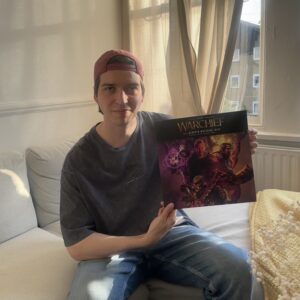
I’ve enjoyed listening to your music and especially love the one from Warchief, which BAFTA award-winning Stuart Brennan directs. In my opinion, the music and film score are just as important as the actors and the screenwriter. The right music can enhance a film. Without a score, films feel incredibly awkward or empty to me. It’s the invisible glue that connects the script, the acting, and the cinematography into a wonderful, cohesive emotional journey. What are your thoughts on that?
That’s actually a very precise definition, and what makes it so fascinating to me is how bizarre it is when you stop to think about it. Music is an abstract art form — unlike literature or cinema, which are much more concrete and precise in their conveyance of emotions. The same piece of music can carry many different interpretations, and yet we still call it the universal language. In film, it can transform what is clearly, say, a romantic kiss into a terrifying omen, or do the very opposite. That’s the kind of thing you learn in university.
In the real world, as I discovered while working with the fearless Stuart Brennan, music is also a tool for fixing things — a not-so-great shot, a weaker performance, whatever couldn’t be achieved on the day of the shoot. Even the absence of music — which is in itself a deeply musical decision — can elevate a scene where you might otherwise expect a score.
Since you mention Warchief, there’s actually a perfect example of this. There’s a scene where the hero, Orion, is left completely alone on his journey — abandoned by his closest friend and left to fend for himself against the orcs and the plaguefaces, which are essentially zombies. I wrote music for that scene that the director and I both really loved, but when it came to the final mix, Stuart suggested muting it at the exact moment Orion is left alone. I wasn’t too keen on the idea at first, but when we watched it back, I immediately realised it was the right choice.
That said, I do think music is ultimately just one tool among many in filmmaking. And if anything, I think it’s a tool that’s being overused right now. So many films and shows today are wall-to-wall music — ninety percent of the runtime underscored — and that would not be my preference. It dilutes the power of the score. And since I consider silence a musical decision in its own right, a film saturated with music from beginning to end tells me it probably wasn’t as thoroughly thought out as it could have been.
One reason I love films is the score, especially in Braveheart and Gladiator. By age 25, you had already composed four film scores and worked with acclaimed directors like Doddi El-Gabry. Your musical talent spans more than one genre. How do you prepare to compose for a film, and what does your process look like?
I’ve been very fortunate to work with Stuart Brennan, Doddi El-Gabry, Jon Eckersley, Maria Pawlikowska, and Jessie Barnett — all exceptional filmmakers who, each in their own way, bring their humanity to the process and make it genuinely collaborative. That means I often get to start composing from the script, take part in the filming process, and bounce ideas directly with the actors — all before I’ve seen a single frame of footage. I think most composers would agree that this is the ideal way to approach a film or show. You get to experiment and build a world at your own pace, so that when the footage finally arrives, and the inevitable deadlines kick in, you’re already well prepared.
Now, this is the cliché every composer loves to say — but I genuinely try to find something special in the sound of each film, ideally something I haven’t heard before. I think I’m still in the process of discovering my own voice — and it’s perhaps bold to assume I ever fully will — so I like to let whatever is on my mind at the time of the project guide my experimentation. In my first short films with Doddi, I was probably drawing from his aesthetic. Questions like “What would an old black-and-white silent film sound like if it were made today?” or “How do you score a vibrant, visually rich epistolary love story with no dialogue?” We’d share playlists and essentially build the music together.
With Stuart, I felt more confident — these were also my first paid jobs and first feature films — and I was given real room to experiment. For the orcs in Warchief, I started with voices and handpans, wanting to make them feel more intelligent and human, based on conversations I’d had with Stuart about who they were. In the end, though, they were smart but not quite human — they’re still beasts. So the handpans were scrapped, and what we were left with was a brutal choir of orc voices, performed by Stuart and me.
Once the locked cut arrives and deliveries are scheduled, I go through a spotting session with the director, map out every scene, note the timecodes and moods, and then begin writing directly to picture. Sometimes I’m lucky and can draw on material I’ve already written during the earlier stages of the process. Other times I need to write something entirely new — but the journey that came before has almost always already shown me the right direction to take.
Is there any advice you would give to someone who wants to pursue a career as a composer? Also, what do you wish you had known about it before you embarked on this journey?
The harsh reality is that most aspiring film composers don’t make it. Like any other industry, it demands time, and you need to be able to survive through the droughts. If you don’t know anyone in the business — as was my case — you need to start building contacts quickly and put together a portfolio, most likely by working on passion projects with no commission attached.
Once you get the chance to impress a director who is looking for a composer for their next project, you need to be ready — and simply knowing how to write music isn’t enough. You need the social skills to make people enjoy your company and a solid portfolio to sell yourself.
Even when you have a project on the go, you need to be already looking for the next one. That’s how you keep the ball rolling. It’s likely you’ll need a side job while you’re building towards making this work, but I’d strongly advise spending as much time as
possible on your craft regardless. Even within communities where there’s genuine goodwill among composers — and in my experience, both the London and Madrid scenes have that — it remains an extraordinarily competitive landscape. Every day you don’t dedicate to improving is a day a hundred other composers have put to good use.
I know this doesn’t paint the most inviting picture, and the truth is that most people who chase this path do so out of pure passion. But for passion to become a career — one that actually sustains you — you need more than love for the craft. You need resilience, patience, and a willingness to go in with your eyes wide open.
Do you have a favorite film that you’ve composed for?
They’re all special in their own way, but one I hold particularly fond memories of — for many different reasons — is My Type (2020), directed by Doddi El-Gabry. It was made entirely during the pandemic. I was back at my parents’ house in Madrid, and Doddi was in Greece, if I remember correctly. The film is a beautifully simple silent short about a young man in an epistolary relationship — exchanging handwritten letters and typewritten notes with a mysterious young woman. We decided to go for a jazzy, orchestral style, something I had never written before.
There was something about the combination of limited resources, a non-existent budget, the fearlessness of scoring only my second short film with a close friend, and an almost complete lack of experience — paired with a genuine love for what we were doing — that made us go big and bold. I didn’t have that clarity at the time, of course. It’s a reflection I’ve only made years later, revisiting the film. And yet I still consider it some of my best music. Not because it’s technically accomplished — it isn’t, and the production is very simple — but because it has soul. The same goes for the film itself. I know Doddi sees flaws in it, but it is such a wholesome, heartfelt piece of cinema. Maybe that’s just melancholy talking, but I love it.
If I were to point to a more substantial project, I’d go with Warlord (2024), my third collaboration with Stuart Brennan. An incredibly ambitious film, shot in under two weeks at the stunning, snow-covered Chillingham Castle under the most demanding conditions — barely any daylight during the shoot. It featured an exceptional cast, including Billy Boyd, Jennifer English, Ryan Gage, and Stuart himself, and represented a huge collective effort from a team that simply wanted to produce their very best work.
Can you share with me the joys and challenges of composing a film score?
The biggest challenges always bring the biggest joys.
People tend to romanticise the job when I describe it — composing music for films, recording with orchestras. But at the end of the day, it is a job. Deadlines are stressful, inspiration doesn’t always strike — and frankly, I’m not even sure it really exists. Often, all you have are your skills and your knowledge, and you have to push through scoring scene after scene, sometimes switching between completely different projects in the same sitting and overhauling your approach entirely. Long hours, endless rounds of feedback, and emotionally demanding scenes — often all three at once — are very real challenges.
And yet, at the end of most days, you find something interesting in what you’ve created. No matter how small, that’s enough fuel to keep going. And once the project is finished, you have something to show for it — something you’re hopefully proud of, something you want to share with the people closest to you and watch them experience. That is a profound joy.
Then there are those rarer moments — when you nail a scene with a piece of music you genuinely love. Even if the director ends up cutting it, the act of discovering that piece — something that works perfectly with the picture and also stands on its own as beautiful music — is one of the greatest joys this job offers. The closing scene of
Assassin’s Guild was one of those moments for me. I wrote the piece at my workstation and had a small budget for recording live instruments, so I wrote out the scores and brought in a xiao — a Chinese flute — alongside violin, cello, and piano. I remember showing my girlfriend at the end of the day, and her eyes lighting up — that was something quite special.
This question is about failure. All of us have had failures in our lives, and we can learn from them. Often, success follows it. Do you have a favorite failure?
The failure I want to talk about is one I think many artists experience, and it’s almost entirely psychological. Back at university, I’d look at many of my coursemates and be genuinely in awe of their abilities — the beautiful pieces they were creating, the awards they were winning, the praise they received from our professors. I didn’t feel like I was as good, or that I was being recognised in the same way. And yet I kept going, in what felt very much like a “fake it till you make it” state of mind. I consider that a personal failure of sorts — because we all bring something special to the table, and I couldn’t see my own worth. It’s easy to say that to someone else who’s struggling with the same thoughts. It’s a great deal harder when you’re the one living it.
Those self-doubts haven’t gone away. Working now at Federico Jusid’s studio alongside incredibly talented people, I still find myself feeling less accomplished than my peers — in music theory, in piano, in production. And yet, to name one thing, I’m the only guitar player in the room, which brings its own value, that I consistently fail to give myself credit for. But I’ve learned to carry that weight without letting it stop me. And the fact is, I’ve been there for almost two years, growing every single day and genuinely loving the work. I have to believe I’m there for a reason, and I try not to let my inner critic and anxiety convince me otherwise.
I suppose this is my favourite failure precisely because it isn’t the kind you recover from with time. It’s something you carry and have to learn to live with. Right now, I choose to use it as motivation — to find the gaps, to keep improving, and to become a better composer because of it, not in spite of it.
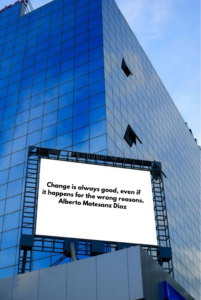
If you could have a gigantic billboard anywhere with anything on it, what message would you want to convey to millions? What would it say and why?
“Change is always good, even if it happens for the wrong reasons.”
All the progress I’ve made in my life has come from chasing change. When work stops feeling stimulating or challenging, I’ve tried to seek it out — often nudged in the right direction by my partner or close friends. It’s scary. It’s uncertain. You might end up in a worse situation. But then you can chase change again. There is nothing stopping you from growing, from building an entirely new life somewhere different, if you’re willing to embrace that uncertainty and push through the fear.
Change can also be forced upon you, and that’s okay, too. About two years ago, I was let go from a job I loved. A few months later, I found myself back in Madrid, working on the biggest projects of my career and learning from one of the greatest film composers working today. This current role is extraordinarily challenging and I keep growing every single day — and yet I continue to fantasise about what comes next.
Always chase change. And enjoy it.
Is there any particular composer or director who has inspired you in your work?
It’s hard to single out just one. There’s a long list of soundtracks that have genuinely influenced me — Joe Hisaishi, Henry Mancini, François de Roubaix, Hans Zimmer, Ludwig Göransson — and I could easily go on. The same is true for directors and films.
But when I look back at my career and trace the big steps that took me to the next level, the names that stand out aren’t the ones on screen — they’re the people I’ve worked with directly. It’s those relationships that have truly inspired and pushed me. From my school guitar teacher, Jorge Herrera Santander, to Doddi El-Gabry, Stuart Brennan, and now Federico Jusid, with whom I’m currently working as his assistant on some remarkable projects.
Each of them has shaped me differently, and the challenges I face alongside them lead me to solutions that become a permanent part of how I work. Working with Federico, for instance, has made me approach music production in a far more elemental way — reaching for sounds I would never have dared to use before, stripping things back to find something rawer and more honest beneath the surface. It’s through people like these that I’m becoming the composer I want to be and, as I mentioned earlier, slowly finding my own voice.
Describe yourself in one word.
Curious
Alberto, this is one of my favorite parts of the chat. Share three fun facts about yourself with my readers and me.
One: I actually appear in Warlord as an armoured guard in several shots — and also as a musician in the cantina scene, where things get rather violent rather quickly.
Two: When I was 18, I took part in the Red Bull Can You Make It challenge — travelling with two friends from Rome to Amsterdam in seven days with no money and no phones. We busked on the streets, slept on pavements, and managed one shower between us over the entire week—quite the experience.
Three: I’m now engaged to my high school sweetheart. We’ve been together for ten years, and I proposed to her in a photo booth in London, just off Tottenham Court Road.
I love ending the chat with a quote. Do you have a favorite quote or saying that has inspired and motivated you in your life that you can share with my readers?
“Be water, my friend.” — Bruce Lee.
And if Bruce Lee’s authority weren’t enough, I have it reinforced on a near-weekly basis by my father-in-law, Víctor. So it tends to stick.
Thank you for reading my chat with Alberto. Follow him on IG and checkout his website (see below for links).